3D materials that travel
A 3D layer carries a material — gold, chrome, copper, one of twenty-three. Keying it from gold to chrome did nothing at all: both ends rendered the same pixels, to the byte.
A material is a look, not a name
The material is stored as a name, and the name on its own is almost nothing to look at. What makes gold gold is three other things: a colour, a metalness and a roughness. A keyframe moved the name and left all three where they were.
So every metal in the list resolved to one shader with a six percent difference in how hard it reflects the room, which is not a change anybody can see. Measured through the renderer: rgb(188,149,133) at one second and rgb(188,149,133) at four, on a layer keyed to go from gold to chrome in between.
The look each material stands for was already written down, and the picker already applied it when somebody chose a material by hand. A keyframe changing the same field was the one path that did not. It does now.
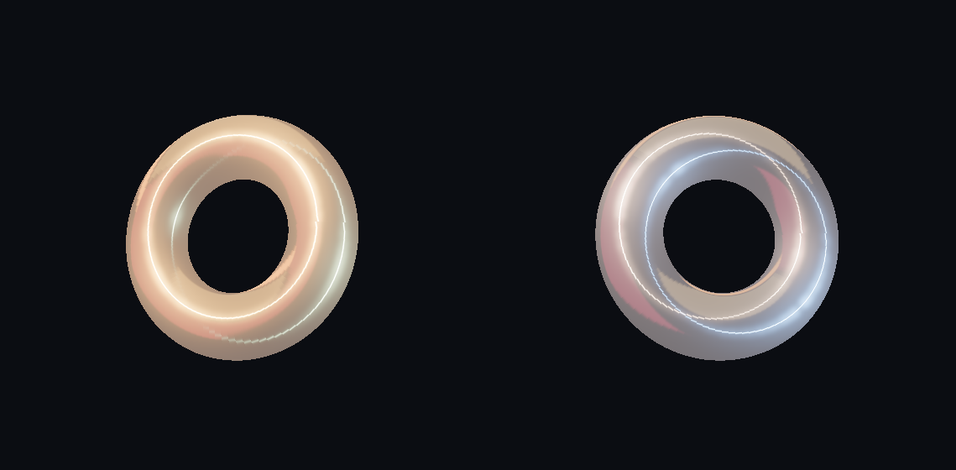
And a name has no halfway point
Once the look followed the name, it arrived as a cut — the track held gold and then switched. That is what a name can do, and it is not what "animate this material to that one" means to the person asking for it.
But the three things that separate two materials are all numbers, and numbers travel. So the look now blends across the interval while the name keeps the behaviour it always had: it steps at the second key. Over a three-second gold-to-chrome the warmth falls evenly rather than holding and jumping.
Two keys on neighbouring frames still give the hard switch, which is how somebody asks for one.
Where the two keys go
The first key where the change should start, the second where it should finish. Everything between them is the journey, and everything after the second key holds.
Easing is read off the left key, the same as it is for a colour and for a position, so a material keyframe and everything else on that frame travel together.
Across families the answer is different, and deliberately so. A metal into a glass still travels its colour, its metalness and its roughness, but the surface itself changes at the key: there is no halfway between opaque and transmissive, and inventing one would look worse than a cut.
A layer that sets a material once and never keys it renders exactly as it did before — none of this reaches a project that was not asking for it.